Skip to content
 

Decking boards

Decking boards are the foundation of any garden deck, and choosing the right material, size, and finish makes a significant difference in how the finished space looks, performs, and how much maintenance it requires over time. Timber offers a natural, classic appearance that can be stained, oiled or painted to complement any garden style. Composite combines the look of wood with the durability of synthetic materials, resisting rot, fading and moisture without regular treatment. Available in a range of lengths, widths, and colours, including grey, black and brown, deck boards and decking planks suit everything from compact patios to larger entertaining spaces.

Showing 57 of 1,376 products

By Material

Choosing the right decking material affects how your outdoor space looks, how long it lasts and how much maintenance it requires over time.

Composite decking boards are one of the most popular choices for low-maintenance gardens, made from a blend of recycled wood fibres and plastic that resists rot, warping and fading without the need for regular treatment or staining. Available in a range of contemporary colours and finishes, composite boards suit modern and family-oriented outdoor spaces where long-term durability is the priority.

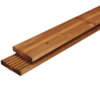
Wooden decking boards offer a natural, classic appearance that suits both traditional and contemporary garden styles. Timber decking is available in a wide range of lengths and finishes, with the flexibility to be painted, stained or oiled to complement the surrounding garden. Hardwood decking is known for its strength, density and premium appearance, making it a long-lasting choice for high-traffic areas and larger decked spaces. Softwood decking boards are a more accessible, cost-effective option that is straightforward to cut and install, making them a practical choice for DIY projects.

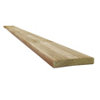
Many timber options are also available as pressure treated decking, with preservative forced deep into the wood fibres to protect against moisture, rot and insect damage for improved longevity.

By Size

Getting your decking board size right from the start saves waste, reduces joins and ensures the finished deck handles the level of use it needs to withstand. Size covers both length and thickness, and both decisions affect installation, performance and appearance.

For length, 2.4m decking boards suit smaller patios, steps and tighter spaces and are easier to handle on site, making them a practical choice for DIY builds. 3.6m decking boards are one of the most popular lengths for standard garden decks, offering good coverage with minimal joins across most medium-sized outdoor spaces. 4.8m decking boards suit larger decked areas where long, uninterrupted runs create a cleaner, more seamless finish.

For thickness, 32mm decking boards are the most robust option, suited to larger decked areas and spaces that experience heavy or frequent foot traffic. 28mm decking boards provide strong structural performance for most domestic garden decks without the additional weight of thicker boards, suiting a wide range of garden sizes and layouts. 25mm decking boards are a cost-effective choice for lighter-use projects, smaller patios and straightforward DIY builds where the supporting framework is closely spaced.

By Colour

Decking board colour has a significant impact on the overall feel of an outdoor space, and the right shade can tie together fencing, planting, garden furniture and the exterior of the property into a cohesive scheme.

Grey decking boards are one of the most popular choices for contemporary gardens, working well alongside stone paving, rendered walls and modern furniture. Grey composite decking boards offer the same versatile finish with added durability and minimal maintenance.

Black decking boards are a popular choice for modern garden designs, creating a bold, high-contrast finish that pairs well with lighter furniture, pale paving and architectural planting.

Brown decking boards provide a warmer, more traditional appearance that complements timber fencing, raised beds and garden buildings. Many brown boards can be stained or treated to adjust or maintain their colour over time.

Green decking boards are a natural-looking choice for cottage, wildlife-friendly and naturalistic gardens, blending with surrounding planting rather than contrasting against it.

Popular now

Not sure where to start with decking? These are the board styles, sizes and colours proving most popular right now, from low-maintenance composites to the most searched colour choices.

Composite boards are consistently one of the top-selling options, valued for their low-maintenance performance and long lifespan. They resist fading, moisture and everyday wear without needing staining or sealing, making them a practical choice for family gardens and outdoor entertaining spaces.

4.8m decking is among the most popular lengths, suited to larger decked areas where long, uninterrupted runs reduce visible joins and create a cleaner finish. For smaller or more compact builds, 2.4m wooden decking offers easier handling and greater flexibility during installation.

Grey composite decking remains one of the most searched and purchased choices, combining the neutral, contemporary tone of grey with the durability and low maintenance of composite construction. They complement a wide range of outdoor furniture, paving and planting schemes and suit most modern garden styles.

FAQs

What is composite decking?

Composite decking is made from a blend of recycled wood fibres and plastic, combining the natural appearance of timber with the durability and low maintenance of synthetic materials. It resists rot, fading, moisture and insect damage without the need for staining or sealing, making it a popular long-term choice for garden decks and outdoor entertaining spaces.
 

What are the best decking boards for low maintenance?

Composite decking boards are widely considered the best option for low maintenance, requiring no staining, sealing or regular treatment to maintain their appearance. Pressure treated softwood decking is a lower-cost alternative that offers good weather resistance with periodic re-treatment. Hardwood decking is naturally durable but benefits from oiling to maintain its appearance over time.
 

What lengths do decking boards come in?

Decking boards are most commonly available in lengths of 2.4m, 3.6m and 4.8m, with some suppliers offering additional sizes. Shorter lengths suit compact patios and DIY builds where easier handling is needed, while longer boards reduce the number of joins across larger decked areas for a cleaner, more seamless finish.
 

How wide are decking boards?

Most standard decking boards are between 90mm and 145mm wide, with 120mm and 125mm being the most common widths for both timber and composite options. Wider boards cover more surface area with fewer boards and fewer fixings, while narrower boards can create a more detailed, traditional appearance across the finished deck.
 

How do I calculate how many decking boards I need?

Measure the total area of the deck in square metres and divide by the coverage per board, which is calculated by multiplying the board width by its length. Always add around ten percent to account for cutting waste, angled cuts and any boards that may be damaged during installation. Most product listings also include a coverage calculator.
 

What is the difference between hardwood and softwood decking?

Hardwood decking is denser, more durable and naturally resistant to rot and insect damage, making it a premium long-lasting choice. Softwood decking is lighter, more affordable and easier to cut and install, making it a practical option for DIY projects. Softwood boards are typically pressure treated to improve weather and rot resistance.