

How to repair paving
Although concrete is very hard-wearing, you might sometimes find that you need to repair your paving, paths or steps. A section of paving or even a single slab might sink because of small ground movements or heavy use, and this can make rainwater collects in puddles. Find out how best to repair damaged paving.
If a slab has sunk or been damaged, it's quite easy to lift and either re-lay or replace it.
Top tip - Slab sizes
There's a slight difference in size between older concrete slabs (which come in imperial sizes,) and new metric ones, which are a fraction smaller. If you have to replace an old slab, see if you can take one from somewhere else on the patio (such as from a position against a wall) and use that to replace the broken one. You could fit the mismatched slab against the wall, where it'll stand out less - or fill the gap with earth and plants.
Safety first - Look after your back
Don't risk hurting yourself. If you're laying slabs of 600mm x 600mm or larger, ask someone to help you lift and lay them.
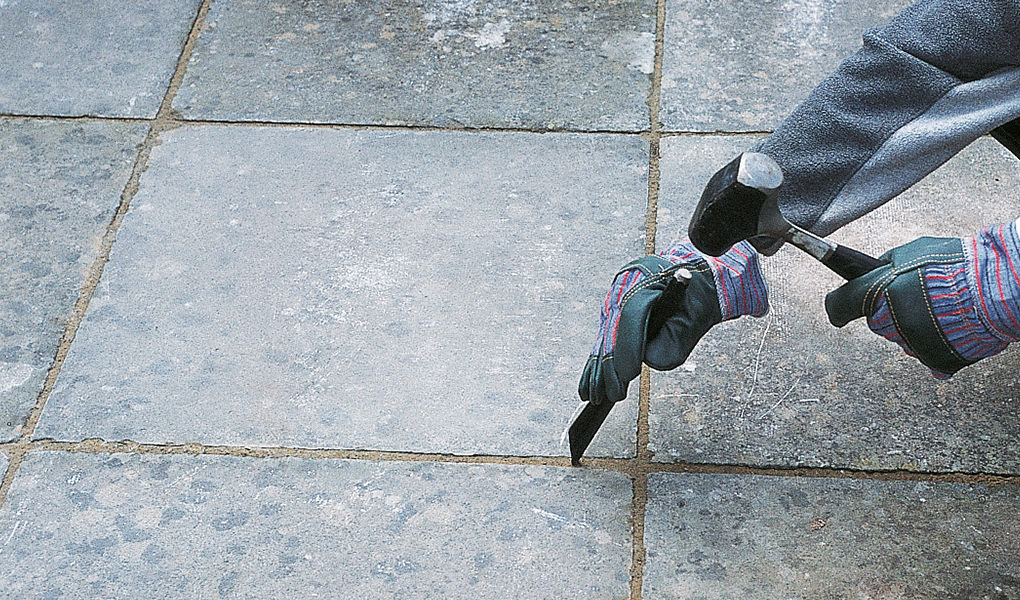
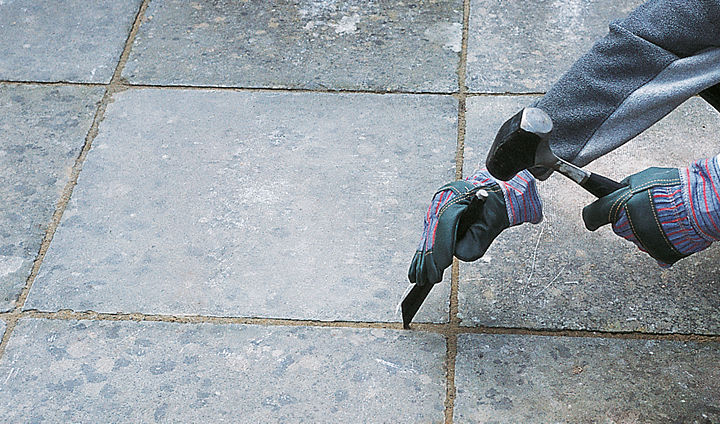
1. Remove the pointing
Making sure you're wearing safety goggles and heavy-duty gloves, chip out the pointing around the slab with a plugging chisel and club hammer.
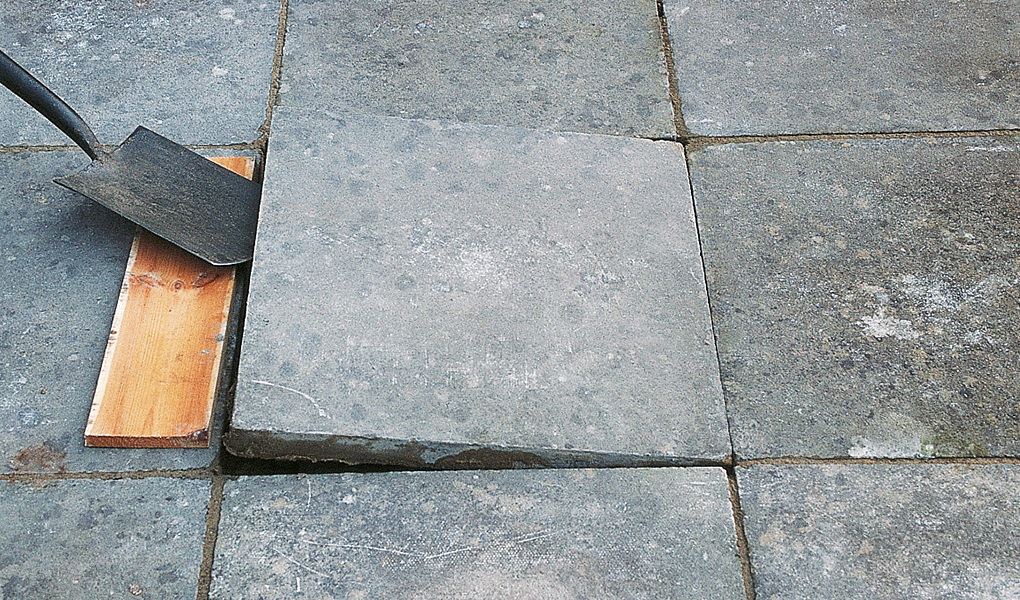
2. Lift and remove the slab
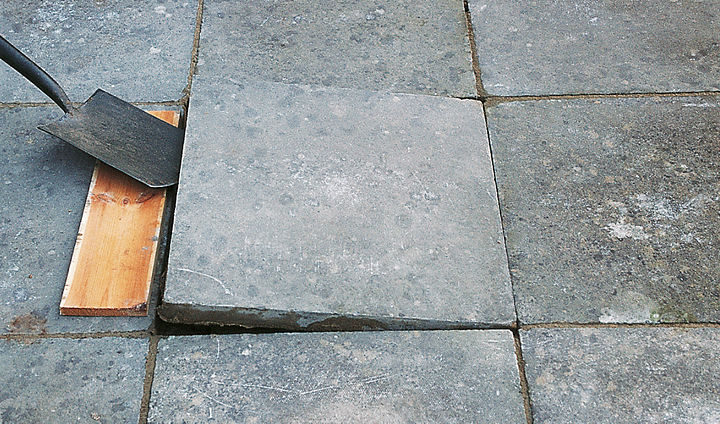
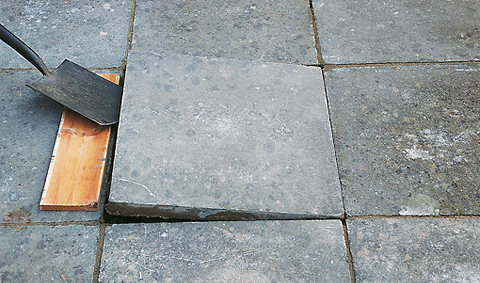
Lift the slab with a spade, using a timber off-cut to protect the slab next to it. Insert a broom handle under the slab and roll it out of the way.
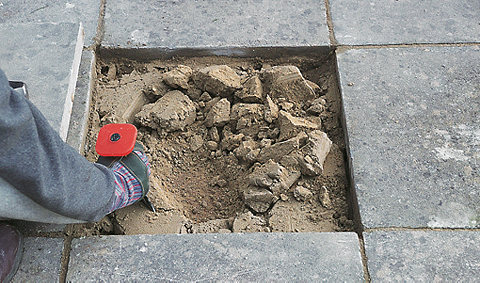
3. Remove the old mortar
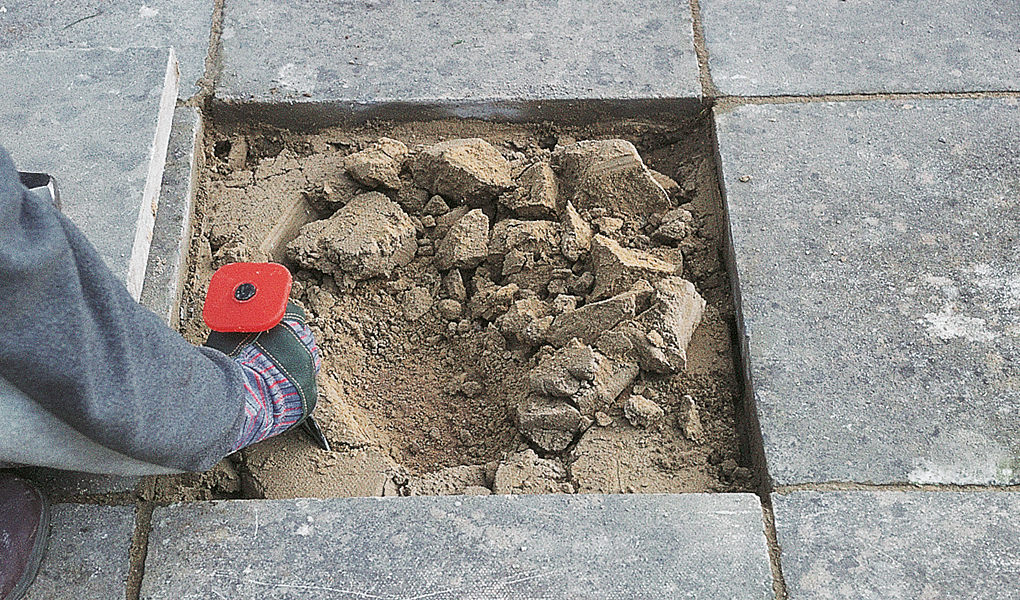
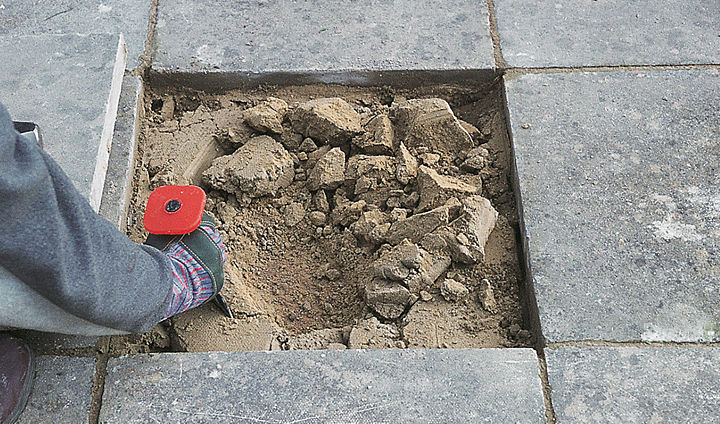
Break up and remove the old mortar using a bolster chisel and club hammer. If the slab has been laid on sand, use a piece of timber to level it and add more sand if you need to.
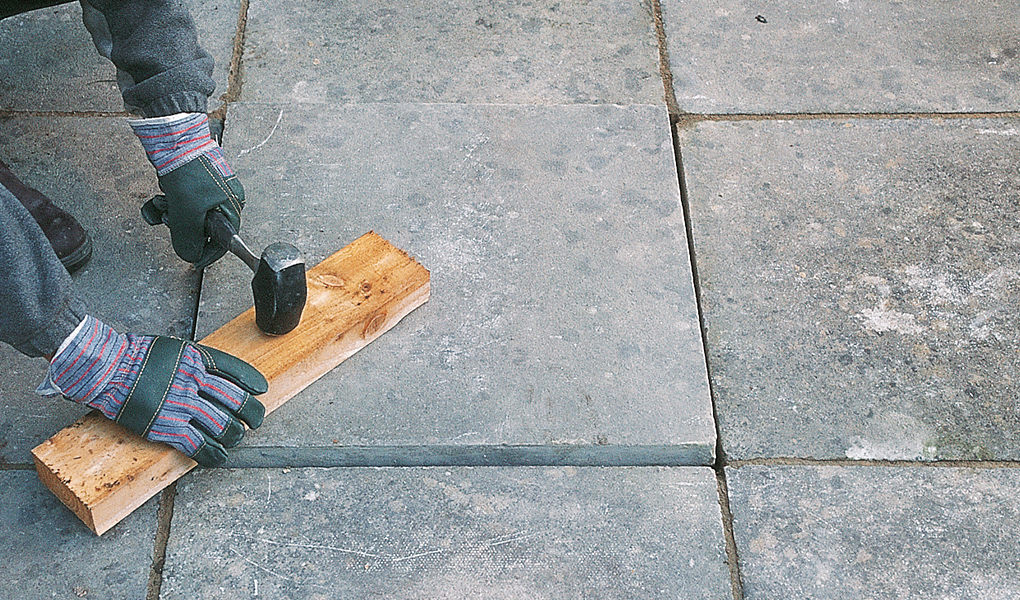
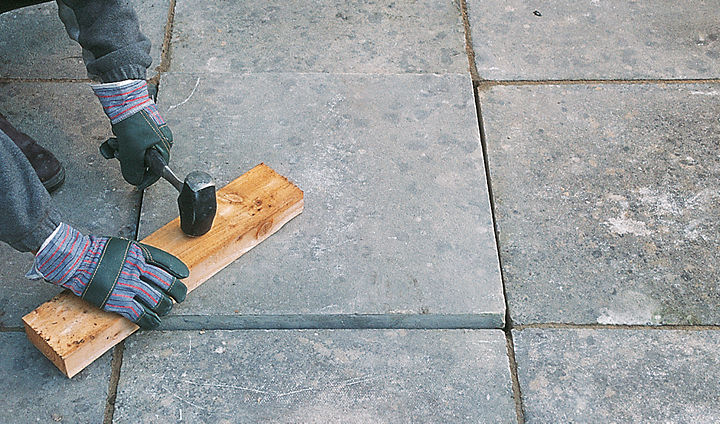
4. Relay the slab
If the slab has been laid on mortar, wet the back and lay it (or a new slab) in position on a fresh bed of mortar mixed with four parts sharp sand to one part cement. Make sure it's in line with the surrounding slabs. Then use a timber off-cut and the club hammer to press the slab into position, and fill the joints with dry mortar.